Pulp Therapy - Dallas, TX
When a Tooth Can Be Saved and When It Shouldn't Be
When decay reaches the nerve inside a tooth, you have a decision to make: treat the nerve and keep the tooth or remove the tooth and hold the space. At Smiles University Pediatric Dentistry, we don't treat one of those as a victory and the other as a failure. Some teeth are worth saving and can be saved reliably. Some teeth are too far gone, and the honest answer is to take them out and protect the space for the permanent tooth underneath. What matters is telling you which one you're looking at. If your child is in pain, don't wait. Call us at (512) 400-3280.
Why Families Choose Smiles University Pediatric Dentistry for Pulp Therapy?
- Three Board-Certified Pediatric Dentists with 40+ Years of Combined Experience
- Dental Practice Welcomes All PPO Insurance Plans
- Comfort-Focused Environment & Sedation Available
What is Pulp Therapy?
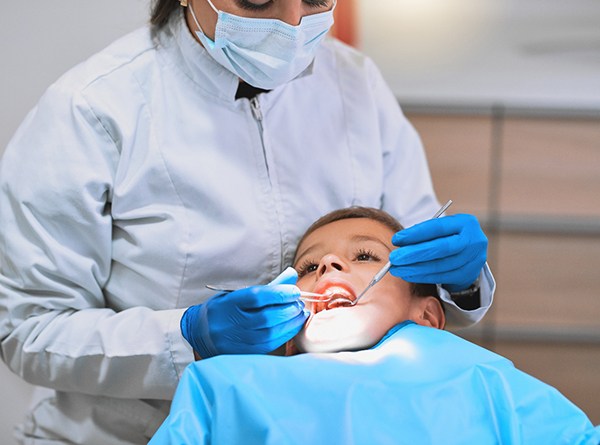
Every tooth has a soft core, the pulp, containing nerves and blood vessels. When a cavity gets deep enough, or a tooth gets hit hard enough, bacteria reach that core. Once they do, the tooth won't heal on its own.
Pulp therapy treats the infected nerve tissue so the tooth can stay in place. In children, the goal is usually not to keep the tooth forever. It's to keep a baby tooth healthy and stable until it falls out naturally, on its own schedule, holding the space for the adult tooth beneath it.
Signs That Could Mean Your Child Needs Pulp Therapy

- Pain that comes on by itself, without eating or drinking anything — especially pain that wakes them at night. This is the most important sign on this list, and the one parents most often wait out.
- Pain that lingers for minutes after something cold or sweet, rather than fading right away
- A pimple-like bump on the gum above or below a tooth, which may drain and then come back
- Swelling of the gum, cheek, or face
- A tooth that has turned gray or dark, especially after an injury
- A tooth that hurts to bite on, or feels loose when the neighboring teeth don't
We can't tell you over the phone which of these means nerve treatment and which means an extraction. Those two symptoms overlap significantly, and distinguishing between them requires an exam and an X-ray. What we can tell you is that none of them get better on their own.
The Pulp Therapy Process

When dealing with baby teeth, our team performs what is known as a pulpotomy. We remove the infected pulp only from the crown of the tooth, leaving the healthy nerve tissue in the roots intact. A medicated material is placed over it, and the tooth is rebuilt, almost always with a crown, since a tooth with this much structure missing will fracture without one.
Your child is numb, and most kids find the appointment unremarkable.
This works only when the nerve in the roots is still healthy. If an infection reaches the roots, a pulpotomy is off the table, and the usual answer is to remove the tooth and place a space maintainer.
There are situations where we'd talk with you about an alternative, typically a tooth that only needs to hold its place for a limited time before it comes out on its own anyway. Whether that's worth doing depends on how much bone is involved, how much root is left, and how close the permanent tooth is to erupting. If your child's tooth falls into that category, we'll raise it and walk you through the tradeoffs.
If a permanent tooth is involved, usually a first molar or a front tooth after an injury, the approach depends on whether the root has finished forming. A young permanent tooth with an open root tip is treated to encourage that root to finish developing, which is very different from a standard root canal. We'll explain which situation your child is in.
When We Recommend Extraction Instead
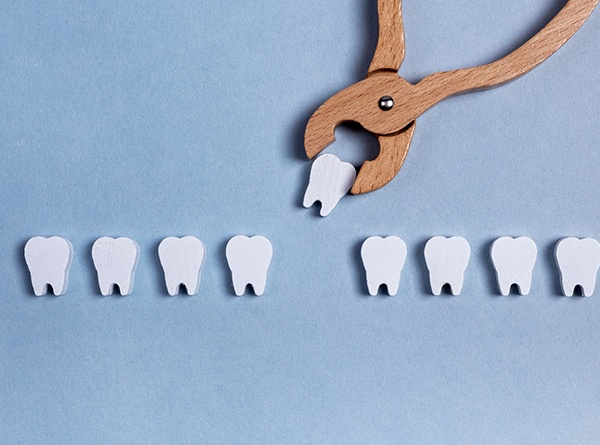
If we don’t expect pulp therapy to provide long-term results, we will recommend tooth extraction. This occurs when:
- There isn't enough tooth left to restore. A crown needs something to hold onto.
- The infection has destroyed the bone between the roots, or the root is being eaten away from the inside.
- The roots have already resorbed significantly. The tooth is on its way out anyway.
- The permanent tooth is close to erupting. Treating a baby tooth that's about to fall out is a procedure for nothing.
- Your child's medical history makes a chronically infected tooth a risk. Certain cardiac conditions, immune suppression, or upcoming medical treatment.
If we extract, we place a space maintainer in most cases. This is not a consolation prize. It's a small appliance that holds the gap open so the neighboring teeth don't drift into it and block the permanent tooth from coming in.
What to Expect on the Day

On the day of your child’s procedure, you can expect:
- We will numb the tooth using topical gel before the injection. Nitrous oxide is typically used, and for children who need more, we offer sedation options which can be discussed before the appointment.
- Your child's lip and tongue may stay numb for one to three hours afterward. Watch them during that window; kids chew a numb lip without noticing, and that's the most common source of soreness after this procedure.
- Mild tenderness for a day or two, manageable with children's ibuprofen or acetaminophen. The deep, spontaneous pain that brought you in should be gone.
Call us if pain increases rather than fades, the gum swells, or the crown comes loose.
The Benefits of Pulp Therapy

Although your child may struggle to see the positive side of this type of treatment, there are immense benefits to pulp therapy, including:
- Your child will no longer experience persistent pain caused by the infected pulp. While they may feel slight soreness after the anesthesia wears off, this is only temporary and can be managed with an over-the-counter pain reliever.
- They will maintain their natural tooth, avoiding extraction and the need for a space maintainer or some form of replacement.
- Pulp therapy has a high success rate of 85-95%, which means your child can expect long-lasting results, depending on the material used and how well the tooth was sealed afterward.